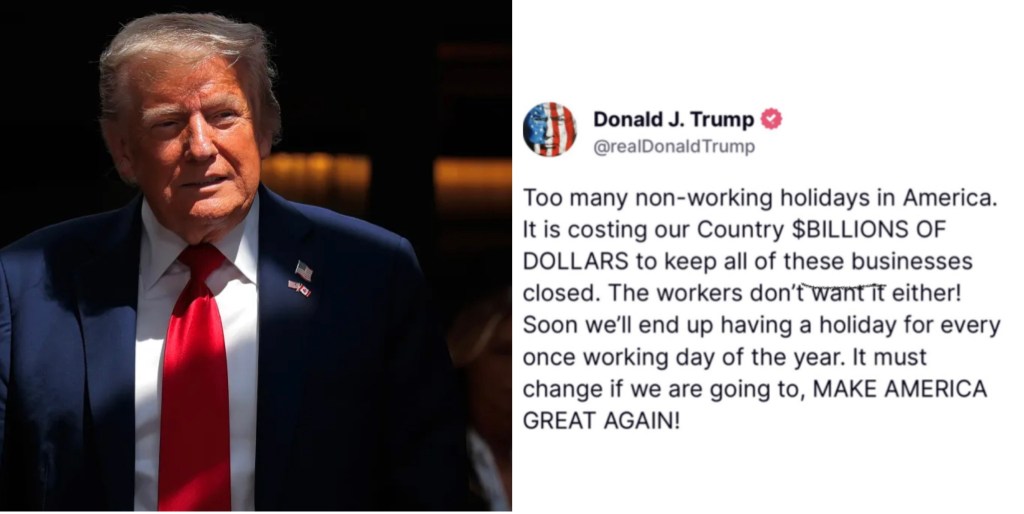
On June 19, 2025, Juneteenth—a federal holiday marking the end of slavery—took on new political significance when former President Trump posted on Truth Social, arguing that the U.S. has “too many non-working holidays”, costing the country billions of dollars in lost productivity. He stated, “The workers don’t want it either!” and warned, “Soon we’ll end up having a holiday for every once-working day of the year.”
This stance marks a dramatic reversal from his 2020 campaign promises, when Trump pledged to elevate Juneteenth as a national holiday and claimed credit for popularizing the observance. His latest position—criticizing Juneteenth alongside other federal holidays—has ignited criticism, especially given that Juneteenth was only added in 2021.
Public and Political Reactions:
• President Biden, who signed Juneteenth into law in 2021, responded by reaffirming his pride in the holiday, calling it “a day of liberation, remembrance, and celebration,” after observing it in Texas this year.
• Community celebrations across the Bay Area—such as Oakland’s “Hella Juneteenth” festival—continued full steam ahead, highlighting strong support and enthusiasm despite Trump’s remarks.
• The White House press office and Trump’s spokesperson offered limited comments, noting the administration remained open on the holiday and that Trump simply wasn’t observing the day officially.
Why It Matters:
• The U.S. currently has 11 federal holidays, some of which are unevenly observed by private employers—while others, like Juneteenth, remain relatively new.
• Trump’s remarks expose ongoing tensions between economic concerns over business closures and broader societal debates on historical recognition and national identity.
• With shifting political allegiances and changing cultural dynamics, the future of federal holidays—and how Americans choose to observe them—is once again a point of national conversation.
⸻
What’s Next:
Will federal holidays—from MLK Day and Memorial Day to Juneteenth—come under renewed legislative scrutiny? Or will public sentiment continue to reinforce their place in the American calendar? As the 2025 election cycle ramps up, this debate is likely to draw even more attention.



 It's Tea ☕️ Tyme
Leave a comment