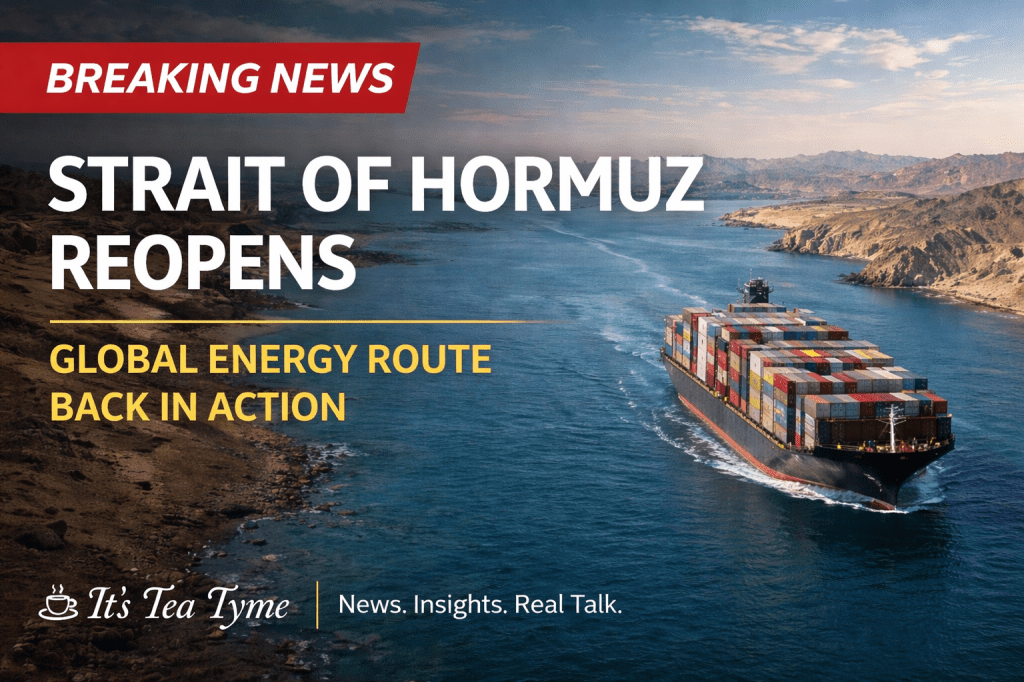
Just minutes ago, officials confirmed that the Strait of Hormuz is open again, easing immediate concerns over global energy supply and shipping disruptions.
This narrow waterway, one of the most critical oil transit routes in the world, handles a significant portion of global oil shipments. So anytime it’s threatened or restricted, markets react fast. And when it reopens, the world takes a breath.
What This Means Right Now
The reopening signals that ships can safely pass through again, at least for the moment. That’s important because even short disruptions can create ripple effects:
- Oil prices may stabilize after recent volatility
- Shipping operations can resume more normally
- Global markets may respond with cautious optimism
Why People Were Watching Closely
The Strait of Hormuz has long been a geopolitical pressure point. Any tension in the region can quickly turn into a global issue because so many countries depend on the flow of oil through this single route.
That’s why today’s announcement matters, it reduces immediate risk, even if the situation is still developing.
The Bigger Picture
While the reopening is good news, it doesn’t mean everything is resolved. The region remains sensitive, and the situation could shift again. For now, though, this update brings a sense of short-term stability to energy markets and global trade.




Leave a Reply