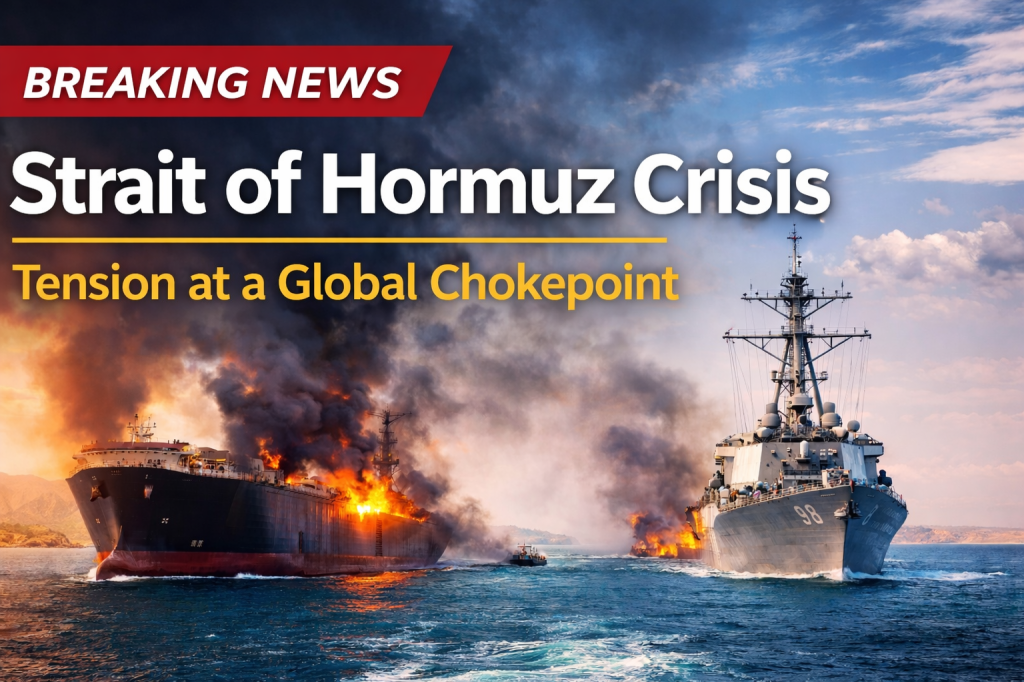
One of the most confusing and risky parts of the Strait of Hormuz crisis is the gap between what was announced and what actually happened at sea.
Declared Open… But Not Truly Safe
Recently, both Iran and the United States signaled that the strait was “open” again during a temporary pause in fighting. This gave the impression that shipping could resume normally.
But in reality, the situation was far from stable:
- Shipping companies were hesitant and demanded safety guarantees before entering.
- Only a small number of vessels even attempted to pass and many turned back mid-route.
What Happened When Ships Tried to Enter
When ships actually tested the route, the “open” status quickly broke down:
- Some vessels reported attacks or gunfire as they tried to transit the strait.
- Iranian forces were still actively firing on or warning ships away, despite the supposed reopening.
- The U.S. was simultaneously enforcing a naval blockade, creating conflicting rules about who could pass.
In short, ships entering the strait faced a contradiction:
- Politically: “It’s open.”
- Militarily: “Enter at your own risk.”
Why This Is the Real Problem
This disconnect is what makes the situation especially dangerous:
- False sense of security → Countries and companies think trade can resume
- Unclear control → Iran claims authority, while the U.S. enforces its own restrictions
- Active threats remain → Mines, patrol boats, and armed responses are still in place
So even when the strait is declared “open,” it isn’t truly functional. Ships can’t rely on consistent rules or protection, which is why many are still avoiding it altogether.
Bottom Line
The biggest issue right now isn’t just closure it’s uncertainty.
The Strait of Hormuz is technically open at times, but practically unsafe. And in global trade, an unsafe route is almost as disruptive as a closed one.




Leave a Reply