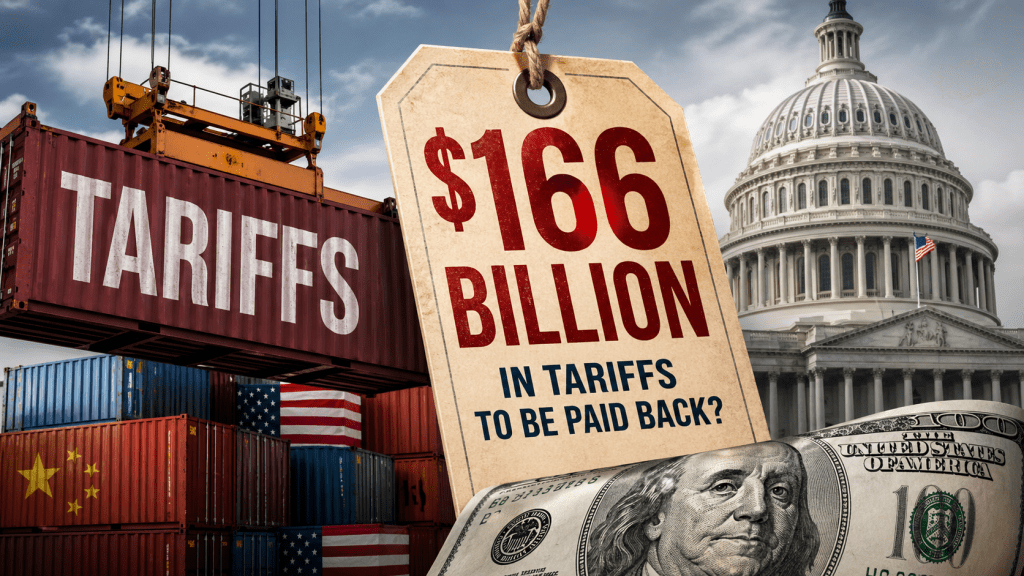
In recent years, tariffs have moved from obscure policy tools to headline grabbing economic weapons. One particularly striking claim that has circulated is that the Trump administration “has to pay back $166 billion in tariffs.” At face value, that number sounds dramatic, almost like a massive bill coming due. But as with most things in trade policy, the reality is more nuanced.
Let’s break down what tariffs are, where this figure comes from, and whether it really represents money that must be “paid back.”
What Are Tariffs, Really?
Tariffs are taxes imposed on imported goods. When a government places a tariff on products from another country, say steel or electronics, it raises the cost of those goods when they enter the domestic market.
During the Trump administration, tariffs were used aggressively, particularly against China, as part of a broader effort to reshape trade relationships and address concerns over intellectual property, manufacturing, and trade deficits.
Who Actually Pays Tariffs?
One of the most misunderstood aspects of tariffs is who pays them. While tariffs are levied on foreign goods, they are typically paid by domestic importers, American companies that bring those goods into the country. These companies often pass the added costs on to consumers through higher prices.
So while tariffs are intended to pressure foreign producers, the economic burden frequently falls, at least in part, on businesses and consumers at home.
The Origin of the $166 Billion Figure
The figure of $166 billion generally refers to the total amount of tariffs collected by the U.S. government during the trade war period, especially from imports affected by new tariff policies.
This is not a “debt” in the traditional sense. It is revenue, money that flowed into the U.S. Treasury from importers paying those tariffs over time.
However, the idea that this money might need to be “paid back” stems from a different issue, legal challenges.
Legal Challenges and Refunds
Some companies affected by tariffs have argued in court that certain tariffs were imposed improperly or exceeded legal authority. In particular, lawsuits have targeted specific tariff mechanisms used during the trade war.
If courts rule that certain tariffs were applied unlawfully, the government could be required to refund those specific payments to affected businesses. In that scenario, portions of tariff revenue, not necessarily the full $166 billion, could be returned.
That is where the “payback” narrative comes from.
Economic Impact Beyond the Headlines
Regardless of legal outcomes, the broader impact of tariffs during this period is widely debated.
Supporters argue tariffs protected domestic industries and strengthened negotiating leverage.
Critics contend they raised prices for consumers, disrupted supply chains, and triggered retaliatory tariffs that hurt U.S. exporters, especially farmers.
The truth likely lies somewhere in between, depending on the industry and timeframe examined.
So, Will $166 Billion Be Paid Back?
Short answer, unlikely in full.
While some refunds could occur if legal challenges succeed, the idea that the entire $166 billion in tariff revenue must be repaid is misleading. Most of that money was lawfully collected under existing trade authorities and is not subject to blanket reversal.
Final Thoughts
The $166 billion figure is a powerful talking point, but it oversimplifies a complex intersection of trade policy, law, and economics. Tariffs are not just numbers on a ledger, they ripple through businesses, households, and global relationships.
Understanding what they are, and what they are not, is essential for making sense of the debate.
As trade policy continues to evolve, one thing remains clear, behind every big number is a much bigger story.




Leave a Reply