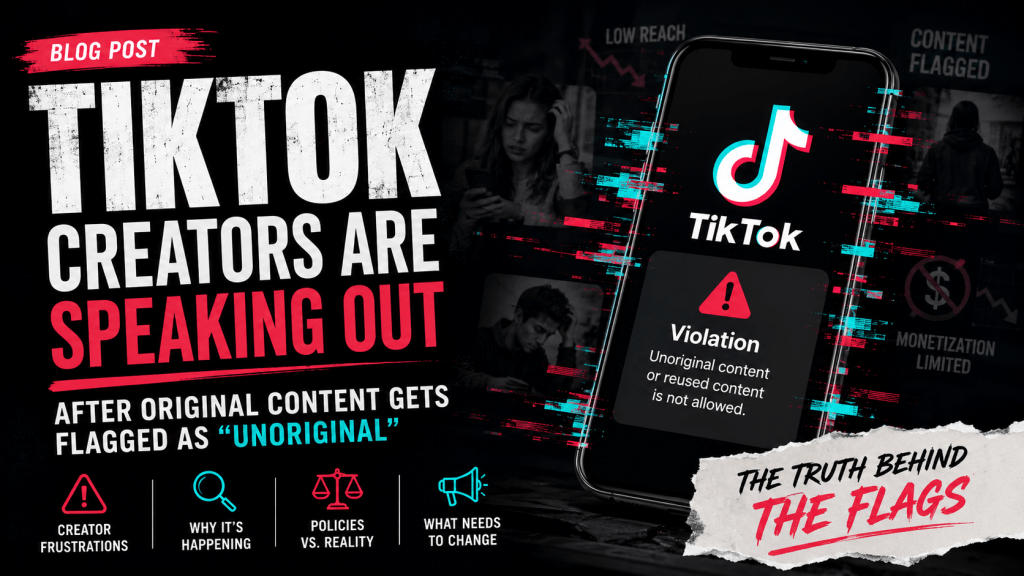
For years, TikTok has told creators to “be original.” But now many creators are saying the platform’s moderation system is doing the exact opposite — flagging original videos as reused or unoriginal content, often without a clear explanation.
Across social media, creators are sharing frustrations after receiving notifications that their content violated TikTok’s “Unoriginal Content” policy, even though the videos were filmed, edited, and uploaded by them.
The issue appears to be affecting creators across multiple niches including fashion, beauty, podcasts, commentary, lifestyle, and affiliate marketing.
Some creators claim:
- Their reach suddenly dropped
- Videos stopped hitting the For You Page
- Monetization features were limited
- Appeals were denied with little detail
And the biggest complaint? Many say TikTok isn’t clearly explaining what triggered the violation.
TikTok does officially have policies against reused, duplicated, low-quality, or recycled content. The platform says these rules are meant to protect originality and improve user experience. However, creators argue the automated system may be incorrectly flagging legitimate content.
The concern has become especially loud among creators who heavily edit their own videos, repost clips from their own accounts, use trending formats, or create reaction-style content.
Some users believe TikTok’s AI moderation system may be struggling to distinguish between actual stolen content and creators reusing their own material in different formats.
Others think the platform is becoming more aggressive as competition increases and TikTok pushes creators toward longer-form and higher-quality content.
Still, there is no confirmed evidence that TikTok is intentionally targeting original creators. At this point, the complaints appear to be tied to automated moderation errors and unclear communication rather than a coordinated effort against creators.
The conversation continues to grow online as more creators compare experiences and demand better transparency from the platform.
For many creators, the frustration isn’t just about a flagged video — it’s about feeling like the algorithm can change overnight without warning.
And in a creator economy where views directly impact income, that uncertainty can feel personal.
What do you think?
Has TikTok become too automated when moderating content, or are stricter originality rules necessary to clean up the platform?

Leave a Reply