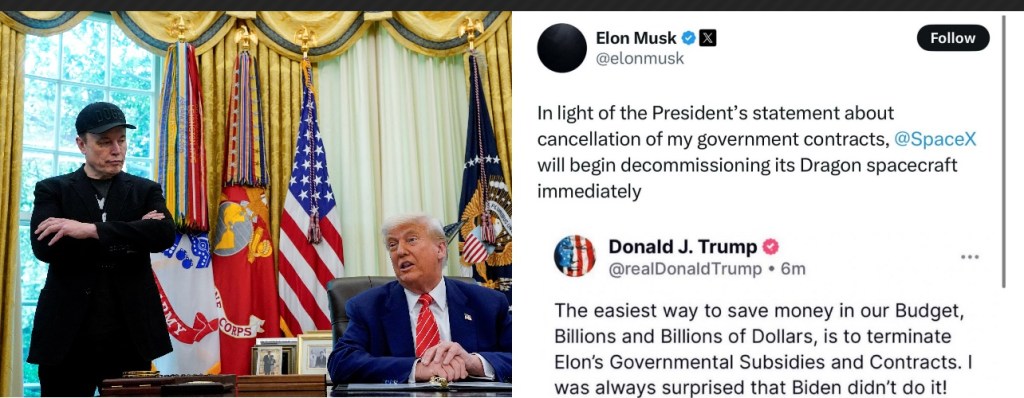
What started as a high-powered political alliance has now erupted into a public war of words and policies. Elon Musk and Donald Trump—two of the most influential and controversial figures in modern American life—are no longer on the same team. And the fallout is playing out in real-time.
In 2024, Musk appeared to be firmly in Trump’s corner. After a failed assassination attempt on Trump during the campaign, Musk offered support both publicly and financially, donating millions to Trump-aligned political action committees. Trump, in return, brought Musk into his administration as a “special government advisor” tasked with cutting bureaucratic fat through the Department of Government Efficiency—cheekily nicknamed “DOGE.”
But the bromance didn’t last.
By mid-2025, Musk had resigned from his government role, citing a need to focus on Tesla, X (formerly Twitter), and SpaceX. That’s when things turned sour. Musk became a vocal critic of Trump’s $1.6 trillion “One Big Beautiful Bill,” slamming it as a reckless spending spree that would inflate the national debt. Trump clapped back, calling Musk “disloyal” and threatening to review his federal contracts.
The dispute took a sharper turn when Musk began reposting old Trump tweets contradicting current positions and accusing Trump of hypocrisy. In a now-viral post on X, Musk questioned Trump’s transparency regarding the Epstein files—a move that many saw as a political death blow.
Insiders say this feud isn’t just about money or ego—it’s about power. Musk, who has increasingly voiced libertarian views, sees Trump’s renewed populism as a threat to innovation and business freedom. Meanwhile, Trump views Musk’s shift as betrayal—and possibly as a threat to his re-election messaging.
As the 2025 presidential race heats up, don’t expect this clash of titans to cool down. In fact, it may reshape the way political influence and tech power collide in America.




 It's Tea ☕️ Tyme
Leave a comment