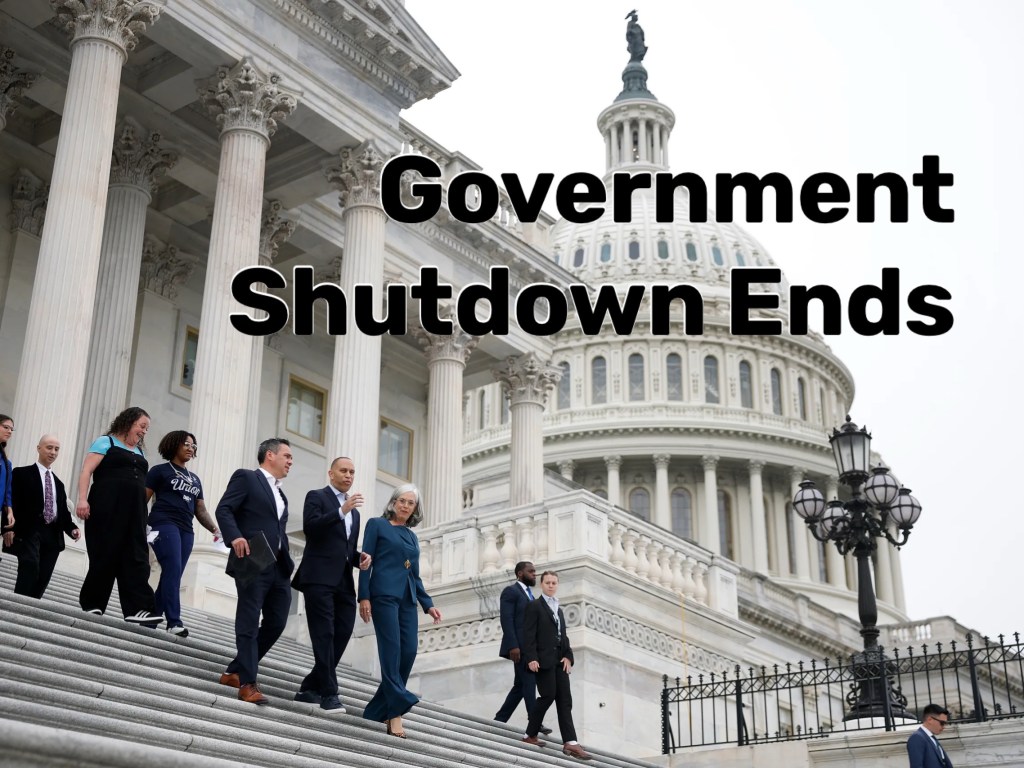
After 43 days of disruption, the longest shutdown in U.S. history officially came to a close on November 12, 2025, when the Donald Trump signed a new funding package passed by the House and Senate. The bill funds most federal agencies through January 30, 2026, and provides full-year funding for certain sectors through September 2026.
While the shutdown is over, the ripple effects are still significant:
The Federal Aviation Administration (FAA) announced flight-cut mandates at major airports have been halved — from 6% to 3% — as staffing improves. The U.S. Census Bureau revealed it will release several months of delayed economic data next week — a fallout of the shutdown’s impact on data collection.
What’s Next:
Back-pay for furloughed and unpaid federal employees is set to begin, but timing and amounts still hinge on further appropriations. Agencies are now focused on “recovery mode” — restoring services, handling backlog, and preventing long-term damage to public trust. Lawmakers will turn their attention to a fresh fight in December over healthcare tax credits left out of the funding deal.
Despite the resolution, the shutdown left lasting scars on federal systems, employees, and public confidence. The next few months will be crucial in assessing how quickly—and how well—the government can bounce back.




 It's Tea ☕️ Tyme
Leave a comment