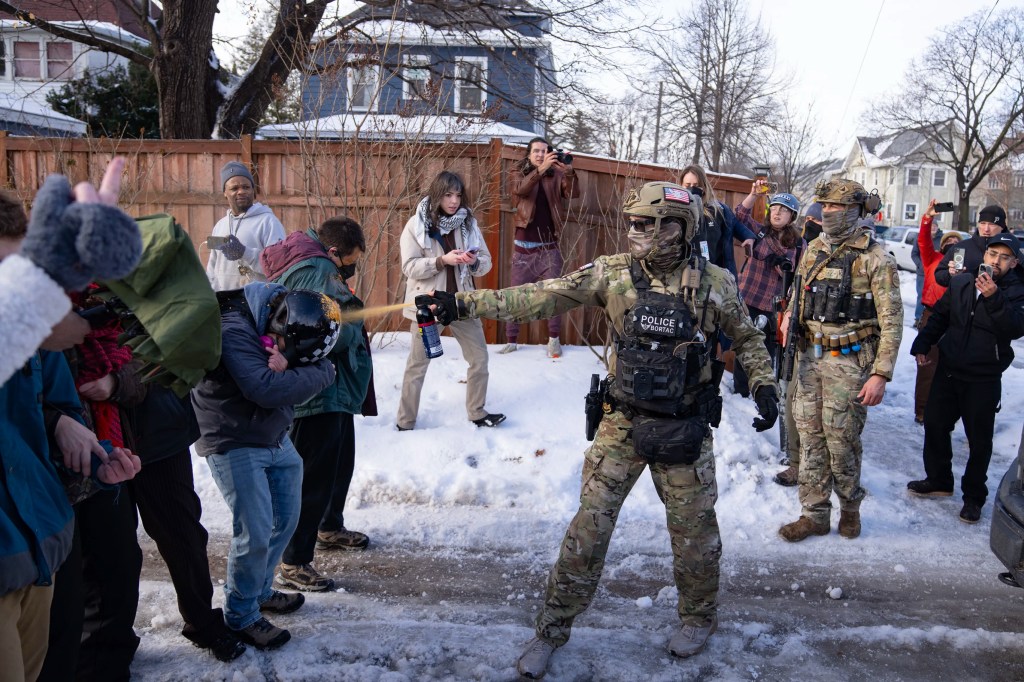
Across the United States, U.S. Immigration and Customs Enforcement (ICE) agents have become increasingly visible in local neighborhoods — from courthouses to residential streets — as part of a broader federal push to enforce immigration laws more aggressively. Recent operations in Minnesota, Massachusetts, and other states have involved hundreds of agents conducting arrests, detentions, and raids, often working with local law enforcement under federal programs that expand cooperation and information-sharing.
This expanded presence has sparked widespread public reaction. Many immigrant-rights advocates and community members argue that ICE’s tactics foster fear and mistrust — especially when agents show up without clear court orders or partner with local police under agreements that allow local officers to assist in federal immigration enforcement. Critics say these practices can blur the lines between federal authority and community safety, raising concerns about racial profiling and civil liberties.
At the same time, some local governments and advocacy groups have responded with protests, legal challenges, and resolutions. Cities like Worcester, Massachusetts, have passed measures limiting cooperation with ICE, while Minnesota’s attorney general has filed a lawsuit seeking to halt a massive federal enforcement surge. In many communities, local leaders are pushing back, emphasizing the need to protect immigrant residents and prioritize constitutional rights.
What This Means
The presence of ICE agents in local communities isn’t just about immigration enforcement — it’s a flashpoint in a larger debate over federal authority, public safety, and civil rights. As enforcement operations continue and oversight questions grow, residents, officials, and legal experts alike are closely watching how these policies affect communities nationwide.


 It's Tea ☕️ Tyme
Leave a comment